

- This event has passed.
Rig and Equipment Selection
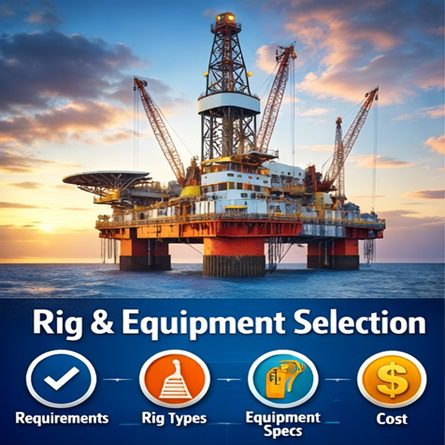
Background:
Rig and equipment selection is a critical early decision in drilling planning that directly affects safety, operational efficiency, cost, and overall project success. Inappropriate rig selection can lead to operational limitations, excessive non-productive time (NPT), or increased HSE exposure. For example, lack of appropriate knowledge may wrongly select rig rental company during tender evaluation.
This course is designed to provide engineers and supervisors—up to drilling management level—with a structured framework for selecting drilling rigs and major equipment based on well objectives, geological conditions, operational challenges, and economic considerations. The training emphasizes decision-making rather than vendor-specific details.
By combining technical fundamentals with operational and managerial perspectives, participants will gain a holistic understanding of how rig capabilities, equipment configuration, and well requirements must align to deliver safe and efficient drilling operations.
Objectives:
• Understand the classification, capabilities, and limitations of different drilling rig types.
• Identify key technical and operational parameters influencing rig and equipment selection.
• Evaluate well requirements against rig capacity, equipment ratings, and site constraints.
• Integrate safety, cost, logistics, and operational risks into rig selection decisions.
• Enhance decision-making skills for rig selection at engineering and management levels.
• Improve cross-functional alignment between drilling, operations, HSE, and management teams.
Recommended Participants:
• Drilling Engineers
• Petroleum Engineers
• Drilling Supervisors
• Drilling Superintendents
• Drilling Managers
• Well Planning & Operations Personnel
• HSE and QA/QC personnel involved in drilling projects
Course Outline:
1. Overview of Drilling Rig Types
• Land rigs, jack-up rigs, semi-submersibles, and drillships.
• Typical applications, strengths, and limitations of each rig type.
2. Well Requirements and Operational Drivers
• Well depth, trajectory, and hole sizes.
• Formation challenges: pressure, temperature, stability, and losses.
• Onshore vs offshore operational environments.
3. Rig Capacity and Key Selection Parameters
• Hoisting systems, hook load, mast and substructure capacity.
• Rotary system, top drive capacity, and setback requirements.
• Mud systems, pumps, and solids control.
4. Major Drilling Equipment Considerations
• BOP configuration and pressure rating.
• Power systems, hydraulics, and control systems.
• Tubular handling and mechanization level.
5. Safety, HSE, and Regulatory Considerations
• Well control requirements and redundancy.
• Regulatory and local authority constraints.
• Human factors and crew competency considerations.
6. Cost, Logistics, and Contracting Perspective
• Day rate vs capability trade-offs.
• Rig mobilization, site preparation, and logistics constraints.
• Fit-for-purpose vs over-specification risks.
7. Rig Selection Workflow and Decision Framework
• Step-by-step rig selection process.
• Screening criteria and technical evaluation matrix.
• Alignment between engineering recommendation and management approval.
8. Case Studies and Lessons Learned
• Examples of successful and failed rig selection decisions.
• Discussion on how early rig selection impacts drilling performance and cost.
Course Leader:
Ir. Steve Hartono – 40 years Field Practitioner
Public Training berikutnya : 9 – 10 Desember, 2026