

- This event has passed.
Integrated Reservoir Management
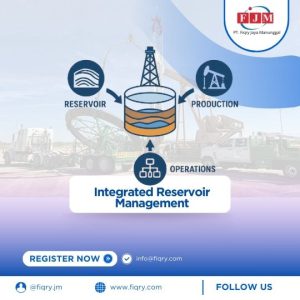
Background:
Integrated Reservoir Management (IRM) is a structured approach to maximize the value of hydrocarbon assets by combining G&G, Reservoir Engineering, Drilling, Completion, Production, and Economic considerations into a single framework. Through effective integration of data and disciplines, operators can improve recovery factors, extend field life, and optimize development plans. This is where “Integrated” play crucial roles.
In practice, however, many engineers tend to focus narrowly on their own disciplines. For example, Production and Completion Engineers often prioritize well deliverability without paying sufficient attention to reservoir behavior, while geoscientists may overlook operational constraints. These siloed approaches lead to inefficiencies, missed opportunities, and suboptimal recovery. A proper IRM program helps overcome these bad habits by fostering collaboration, aligning objectives, and ensuring every decision accounts for both well performance and reservoir sustainability.
Objectives:
- Understand the principles and importance of integrated reservoir management
- Recognize the risks of siloed decision-making and the value of cross-disciplinary collaboration
- Strengthening Production & Operations involvement in reservoir management
- Apply multidisciplinary approaches to reservoir characterization and development
- Evaluate production performance and identify opportunities for reservoir optimization
- Develop reservoir surveillance programs and integrate monitoring data
- Apply enhanced oil recovery (EOR) and improved oil recovery (IOR) strategies.
- Build effective collaboration between geoscience, engineering, and operations teams.
Recommended Participants:
- Reservoir Engineers
- Geologists and Geophysicists
- Production and Petroleum Engineers
- Drilling and Completion Engineers
- Field Development Planners
- Decision Makers in Reservoir Development
Course Outline:
1. Introduction to Integrated Reservoir Management
- Definition, scope, and objectives of IRM
- Common bad habits: “my wells vs. your reservoir” mindset
- Why integration matters for maximizing recovery
2. Reservoir Characterization
- G&G data integration and Petrophysical evaluation
- Reservoir modeling fundamentals
3. Reservoir Engineering Fundamentals
- Material balance and decline curve analysis
- Fluid flow in porous media
- Drive mechanisms and recovery factors
4. Collaboration with Production & Operations Team in Reservoir Surveillance
- Role of Production and Operations
- Daily well monitoring and field reporting as surveillance inputs
- Building cross-disciplinary awareness between reservoir and Operations
5. Production Data and Performance Evaluation
- Well performance analysis & reservoir pressure data
- Identifying production bottlenecks
- Bridging production/well focus with reservoir sustainability
6. Reservoir Surveillance and Monitoring
- Tools and techniques for surveillance
- Production logging, pressure monitoring, tracer methods
- Integrating real-time data for decision making
7. Reservoir Management Strategies
- Primary, secondary, and tertiary recovery methods
- Waterflooding and gas injection strategies
- IOR/EOR project screening and evaluation
8. Field Development Planning
- Reservoir simulation for forecasting and planning
- Well placement and infill drilling strategies
- Balancing short-term production goals with long-term recovery
9. Risk Management in Reservoir Development
- Identifying and mitigating uncertainties
- Sensitivity analysis and scenario planning
- Cross-disciplinary decision-making
10. Case Studies and Best Practices in IRM
- Lessons learned from siloed vs. integrated approaches
- How poor coordination wastes reservoir potential
- Group discussion and application exercise
About The Course Leader:
Prof. Dr.-Ing. Bonar Tua Halomoan Marbun