

- This event has passed.
Enhanced Oil Recovery (EOR)
Background & About the Course:
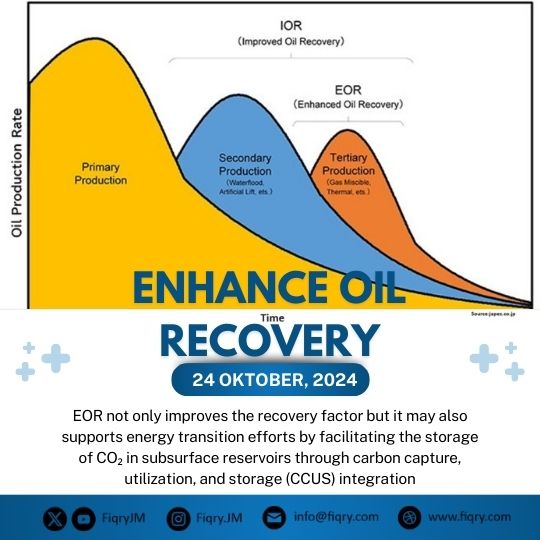
The global demand for energy continues to rise, making the efficient extraction of hydrocarbons from reservoirs increasingly critical. Enhanced Oil Recovery (EOR) plays a pivotal role in maximizing recovery from mature fields, often increasing output by 30-60% beyond primary and secondary recovery techniques. With advancements in technology and innovative techniques such as thermal, chemical, and gas injection methods, EOR has become a game-changer in the oil and gas industry.
EOR not only improves the recovery factor but also supports energy transition efforts by facilitating the storage of CO₂ in subsurface reservoirs through carbon capture, utilization, and storage (CCUS) integration. This course offers comprehensive insights into these advanced recovery techniques, their principles, and their practical applications.
This intensive training program is designed to provide participants with a solid understanding of the science, technologies, and strategies behind Enhanced Oil Recovery. It bridges theoretical knowledge with real-world applications, equipping attendees with the skills to assess, design, and implement EOR projects effectively.
Course Objectives:
- Understand the fundamental principles of Enhanced Oil Recovery (EOR).
- Evaluate different EOR techniques and their suitability for various reservoir conditions.
- Learn about the latest advancements and trends in EOR technologies.
- Assess the economic and environmental considerations of EOR projects.
- Develop practical skills in designing and planning EOR strategies.
Who Should Attend:
- Reservoir engineers and geoscientists.
- Petroleum engineers involved in field development.
- Technical staff working on mature oil fields.
- Project managers and decision-makers in the oil and gas sector.
Course Content:
- Introduction to Enhanced Oil Recovery (EOR): Overview of EOR principles, importance, and applications in maximizing oil recovery.
- Thermal EOR Methods: Techniques like steam injection and in-situ combustion, focusing on their mechanisms and field applications.
- Chemical EOR Methods: Methods such as polymer flooding and surfactant-polymer flooding, emphasizing chemical interactions and efficiency.
- Gas Injection Techniques: CO₂, nitrogen, and hydrocarbon gas injection, with a focus on miscible and immiscible processes and their impact on recovery.
- Principle of Immiscibility: Explanation of immiscible processes in porous media and how they improve oil displacement.
- Microbial EOR (MEOR): Use of microorganisms to enhance oil recovery through biological processes in reservoirs.
- Electric EOR: Methods like electromagnetic and resistive heating to mobilize hydrocarbons in challenging conditions.
- Gas Lift: Application of gas injection to maintain production rates and optimize EOR methods.
- Screening Criteria for EOR Projects: Identifying suitable reservoirs and conditions for implementing EOR.
- Economic and Environmental Impacts: Overview of cost challenges, project feasibility, and environmental considerations.
- CCUS (Carbon Capture, Utilization, and Storage) and EOR Integration: Combining carbon storage with EOR to enhance recovery sustainably.
- Field Application and Case Studies: Examples of successful EOR projects, best practices, and innovations.
About the Course Leader:
Prof. Dr.-Ing. Bonar Tua Halomoan Marbun