

- This event has passed.
Stuck Pipe Prevention
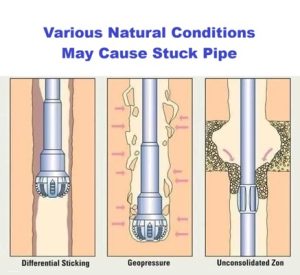
Background:
Stuck pipe is one of the most critical and costly problems in drilling operations across the Oil & Gas and Geothermal industries. With more complex well trajectories, smaller hole sizes, and an industry push to “drill to the limit,” the risk of stuck pipe incidents has grown significantly. Although rigs are now supported by advanced mud systems, rotary steerable tools, and downhole sensors, a stuck pipe event can still lead to major Non-Productive Time (NPT), expensive fishing operations, and even the loss of high-value downhole tools. Prevention is far more cost-effective than remediation, and successful prevention requires not only the right tools but also strong operational awareness.
Ultimately, people play the key role in preventing stuck pipe. Effective planning, real-time monitoring, and good decision-making are as important as execution at the rig site. A well-prepared and collaborative drilling team can anticipate risks, recognize early warning signs, and respond promptly to minimize potential stuck pipe incidents. This stuck pipe prevention training is designed to equip participants with the knowledge and practical tools to reduce risks, respond effectively, and ensure safer and more efficient drilling operations.
Objectives:
1. Identify mechanisms and risk factors leading to stuck pipe incidents.
2. Anticipate, prevent, and resolve stuck pipe issues such as wellbore instability, hole cleaning, differential sticking, and poor wellbore geometry.
3. Assess wellbore stress mechanics and their impact on stability.
4. Recognize and interpret early warning signs of developing problems.
5. Apply effective hole cleaning techniques in vertical and deviated wells.
6. Use drilling jars effectively and understand their mechanics.
7. Implement best practices in drilling and tripping to minimize risks.
8. Evaluate cost-effective solutions in planning fishing operations.
Recommended Participants
1. Drilling Engineers, Drilling Supervisors, and Company Men.
2. Rig Site Personnel, including Tool-pushers, Drillers, and Assistant Drillers.
3. Completion and Well Services Engineers.
4. Personnel from Operators, Drilling Contractors, and Service Companies who are involved in drilling operations and well planning.
Course Outline
1. Introduction to Stuck Pipe
- Definition, types, and consequences.
- Impact on cost, time, and safety.
- Importance of prevention vs. remediation.
2. Mechanisms of Stuck Pipe
- Differential sticking, mechanical sticking, and pack-off.
- Real-life case studies and lessons learned.
3. Rock Mechanics & Wellbore Stress
- Understanding rock strength and formation behavior.
- Stress around the wellbore and how it affects drilling.
4. Wellbore Instability
- Causes and consequences of instability.
- Mud weight selection and pressure management.
5. Trend Recognition & Early Warning Signs
- Parameters to monitor (torque, drag, ECD, cuttings load).
- Data interpretation and proactive actions.
6. Hole Cleaning Practices
- Factors affecting hole cleaning.
- Techniques for vertical, deviated, and horizontal wells.
7. Differential Sticking Prevention
- Mechanisms of sticking due to pressure differential.
- Best practices to avoid stuck pipe.
8. Wellbore Geometry & Tripping Practices
- Effect of doglegs, tight spots, and ledges.
- Proper tripping procedures and connection practices.
9. Fishing Operations Overview
- When and how to fish.
- Cost considerations and decision-making for fishing vs. sidetrack.
10. Best Practices & Case Studies
- Practical examples of successful stuck pipe prevention.
- Group discussion and lessons learned.
About The Course Leader:
Prof. Dr.-Ing. Bonar Tua Halomoan Marbun
Public Training berikutnya : 21 – 23 September, 2026